

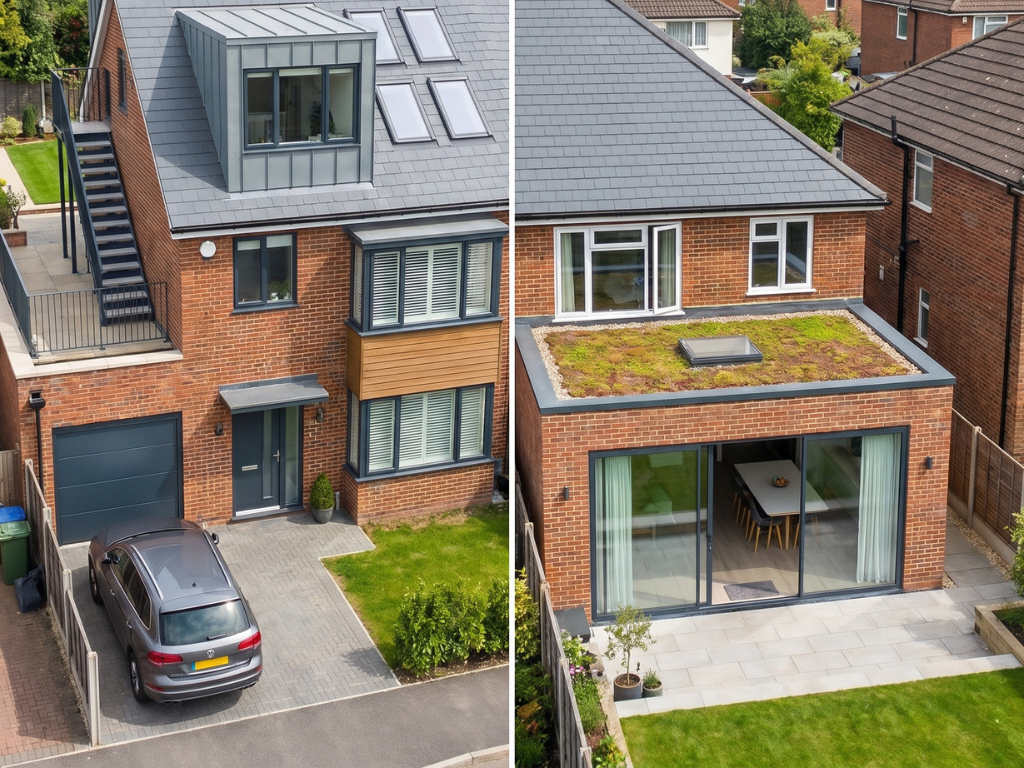
If your home is starting to feel cramped, you may be wondering whether it’s time to move or make better use of the space you already have. For many homeowners, two of the most popular options are a loft conversion or a home extension. Both can create valuable additional living space, increase property value, and improve the way your home functions. However, the right choice will depend on your property, budget, and long-term goals. In this guide, we’ll compare loft conversions and home extensions to help you decide which option is best for your home.
What Is a Loft Conversion?
A loft conversion transforms unused roof space into a functional room, such as:
- An additional bedroom
- Home office
- Guest room
- Children’s playroom
- Master suite with en-suite bathroom
By utilising existing space within your property, loft conversions can provide significant extra living space without affecting your garden.
What Is a Home Extension?
A home extension increases the footprint of your property by building outward.
Common types of extensions include:
- Rear extensions
- Side return extensions
- Wrap-around extensions
- Double-storey extensions
- Kitchen extensions
Extensions are particularly popular for creating larger kitchens, dining areas, family rooms, and open-plan living spaces.
Space Comparison
Loft Conversion
A loft conversion makes use of space that already exists within the structure of your home.
It’s often ideal if you need:
- One or two additional rooms
- An extra bedroom
- A home office
- Additional bathroom facilities
However, the amount of usable space will depend on roof height and the existing structure.
Home Extension
An extension generally offers greater flexibility and can create larger open-plan living areas.
It may be the better option if you’re looking to:
- Expand your kitchen
- Create a larger family room
- Improve indoor-outdoor living
- Add substantial ground-floor space
Cost Considerations
The cost of both options varies depending on size, design, specifications, and structural requirements. The most suitable solution often depends on the layout and limitations of your property.
In many cases:
- Loft conversions can be more cost-effective because they utilise existing roof space.
- Extensions may involve more groundwork, foundations, drainage alterations, and structural work.
Planning Permission
Loft Conversions
Many loft conversions can be completed under permitted development rights, although this will depend on the property’s location and the scope of work.
Extensions
Some extensions may also fall under permitted development, while larger projects often require planning approval.
Professional guidance can help determine which permissions may be required before work begins.
Impact on Outdoor Space
One major advantage of a loft conversion is that it generally has little impact on your garden or outdoor areas. Extensions, by contrast, increase the building footprint and may reduce available outdoor space. For homeowners with smaller gardens, this can be an important consideration.
Property Value
Both loft conversions and extensions can add value to your property when designed and built correctly. A loft conversion can increase appeal by adding additional bedrooms and bathrooms. An extension can create larger, more desirable living spaces that appeal to modern buyers, particularly open-plan kitchens and family areas. The value added will depend on your property’s location, design, and overall market demand.
Which Option Is Right for You?
A loft conversion may be the best choice if:
- You need an extra bedroom or office.
- You want to maximise existing space.
- You have sufficient roof height.
- You want minimal impact on your garden.
A home extension may be the better option if:
- You want a larger kitchen or family room.
- You need substantial additional living space.
- You want to create open-plan living.
- Your property has suitable outdoor space available.
Why Professional Design and Build Matters
Whether you’re considering a loft conversion or an extension, careful planning is essential. Factors such as structural design, planning requirements, building regulations, budget management, and project coordination all play a key role in achieving a successful outcome. Working with an experienced design-and-build company ensures every stage of the project is managed efficiently, helping to reduce stress and avoid costly mistakes.
Suburban’s Final Takeaway
Both loft conversions and home extensions can transform your home, improve your lifestyle, and increase property value. The best option depends on your available space, budget, and long-term objectives. A professional assessment can help identify the most practical and cost-effective solution for your property.
At Suburban Group, we specialise in loft conversions, home extensions, renovations, and complete design-and-build services across South London and Surrey. Our experienced team can help you explore your options and create a solution tailored to your home and lifestyle. Contact the team today to discuss your needs.
